



Every retreat is a story told in real time. Not a neat arc, not a tidy rise-and-fall. More like water bending around stones.
Participants don’t just attend a retreat; they co-author it. The plotline emerges in the weaving: a conversation, a silence, a moment of rupture no one planned but everyone felt. Once you begin to see retreats as stories, you stop aiming for climax and resolution. You start sensing its natural patterns.
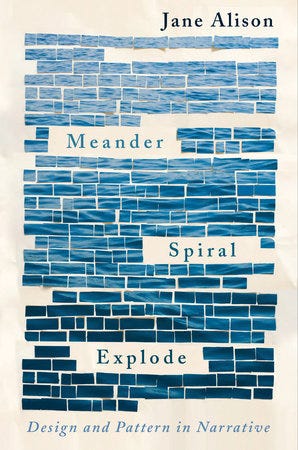
Jane Alison’s Meander, Spiral, Explode: Design and Pattern in Narrative cracked something open for me. She helped me unlearn what I’d been told since high school: not all stories must follow the formulaic arc of rise, climax, and fall.
And then I understood: some retreats follow a schedule. They climb toward a peak on a well-marked trail. Others move more like a river, water bending around stones—drawn by hidden currents and shifting contours. Transformation arrives not by design but by surprise.

Meander — The Art of Getting Lost
A retreat begins before anyone arrives. It begins in the curve of the invitation, the slow widening of anticipation.
You feel it in your body when it’s done right: the noise thins, the air shifts, and you find yourself in a clearing that wasn’t there before. It doesn’t announce itself—it reveals.
Rebecca Solnit wrote in A Field Guide to Getting Lost:
“Lost really has two disparate meanings. Losing things is about the familiar falling away, getting lost is about the unfamiliar appearing.”
That is the work of a retreat—not clinging to the familiar in a well-planned schedule, but getting lost enough so the unfamiliar can arrive. To step sideways from familiar maps and discover territory you didn’t know you needed.
Try This — Executive Team Offsite
The invitation begins with one uncompromising purpose: We are here to decide X and stop doing Y. At the opening, each executive tells a three-minute story of a decision they regret. Laptops stay closed. The retreat begins in sharing stories, not an big presentation.
A meandering opening teaches patience. It lets you wander, even digress, knowing that detours carry discovery.

Spiral — Returning to What’s Essential
The middle of a retreat is not a highway from start to finish—it is a staircase, circling the same axis again and again, each time a little higher or deeper.
Spirals let us revisit what matters. They resist the illusion that progress is only forward. They know that understanding requires return.
The rhythm matters more than the activities. Solitude prepares connection; play unlocks what solemnity locks tight; structure creates the safety for improvisation. Each loop through the spiral metabolizes insight—turn by turn, layer by layer.
Try This — Writing Retreat
Pick two questions. Return to them daily in three forms: a dawn freewrite, a mid-day pair walk, an evening workshop. Each pass tightens, clarifies, deepens. By the third return, the draft stops wandering—it spirals into clarity.
Spirals remind us: change does not come in a line. It comes in turns, in repetitions that aren’t repetitions—because each time we return, we are not the same.

Explode — When Stories Scatter into the Future
The end is not resolution but release. A star bursts, seeds scatter, embers flare outward. Retreats end this way—less with closure than with patterns radiating forward into the lives participants are returning to.
Too often, endings fizzle under logistics, or end with halfhearted farewells. But the close is where the story detonates—where what happened here catalyzes what happens next.
Robert H. Goddard, father of modern rocketry, once said:
“Just remember—when you think all is lost, the future remains.”
That is the essence of a retreat’s ending: what looks like a final moment is really dispersal. The retreat is not over; it carries on in choices made differently, in conversations remembered, in commitments renewed.
Try This: Adventure & Challenge Retreat
Send participants into solitude with: The fear I met, the skill I now trust, the relationship I will strengthen this week. Then pair as “trail buddies” for weekly check-ins over the coming month.
Ask: What will you let go of? What will you carry forward? What is your next visible step?
Anchor these in ritual or artifact—small seeds participants can carry home, reminders that germinate in their own time, sparking growth where it is most needed.
The ending matters most not for how it feels in the room, but for how it bursts open afterward—with new words spoken, new silence kept, new choices made.
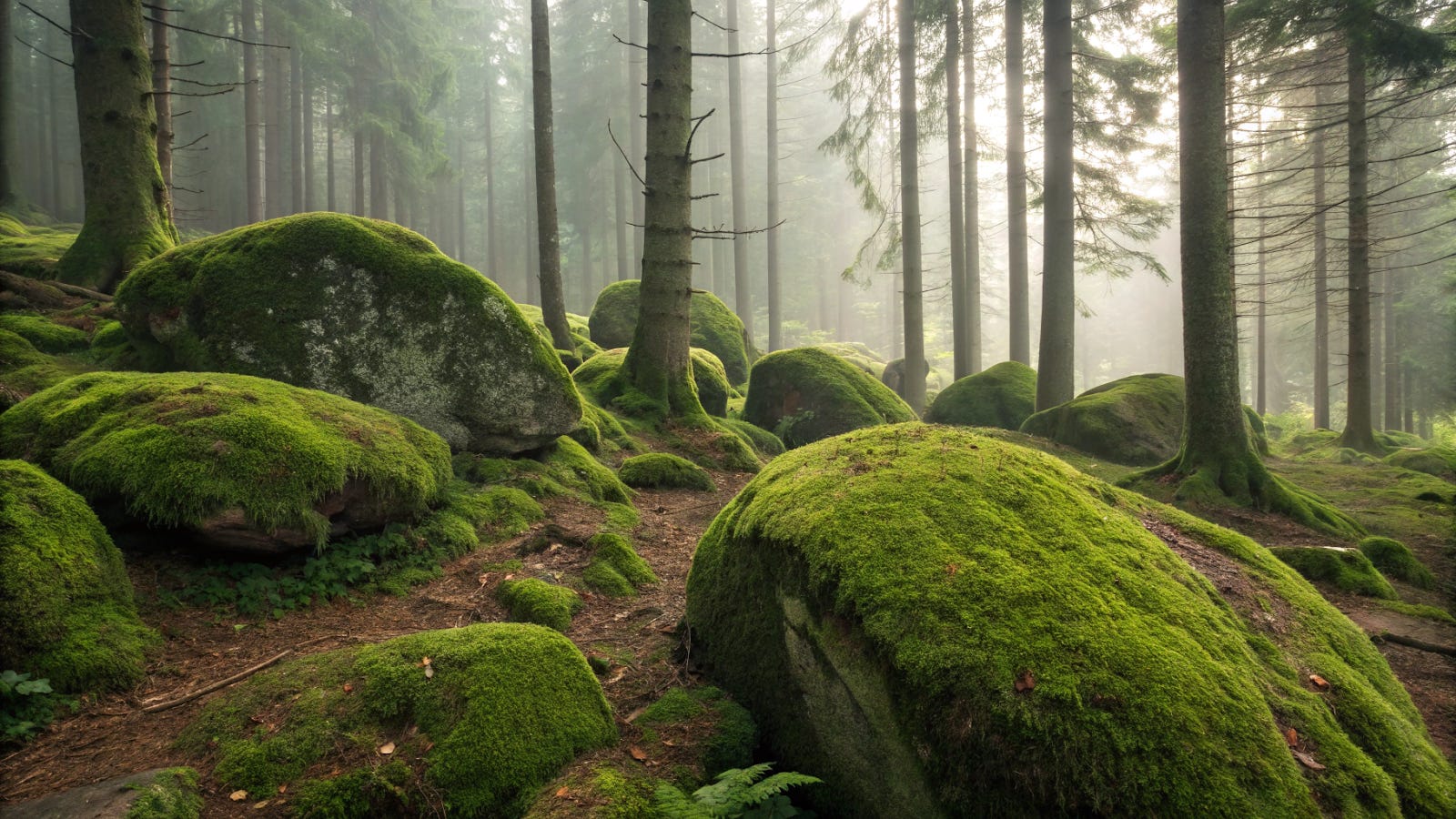
Stepping Back onto Life’s Wild Course
To design a retreat is to resist the formulaic arc and embrace the untamed story.
Even in endings, the future remains. That is the essence. It does not end when the chairs are stacked and the bags are packed. It clears a way for our true nature to Rewild the wonder compacted by the pressures of life.
The formula sends a survey: Was the retreat satisfying?
The story leaves a deeper question: What future was set in motion?
Did it meander into discoveries no one expected?
Did it spiral into deeper truths too real to ignore?
Did it explode into conversations and callings impossible before?
A retreat is not an event with agendas and stages,
but a story that unfurls.
It pulls us back into nature’s rhythms—
the beauty of spirals, bends, and curves.
The best stories linger even as the book gathers dust.
They root our lives,
rewilding our true nature—
the “unfamiliar appearing,”
so life once again takes its wild course.
If you found meaning in this post, check out the difference between factory time and forest time or the reasons why we retreat.


